
How Lumber is Prepared before It reaches Construction Sites?
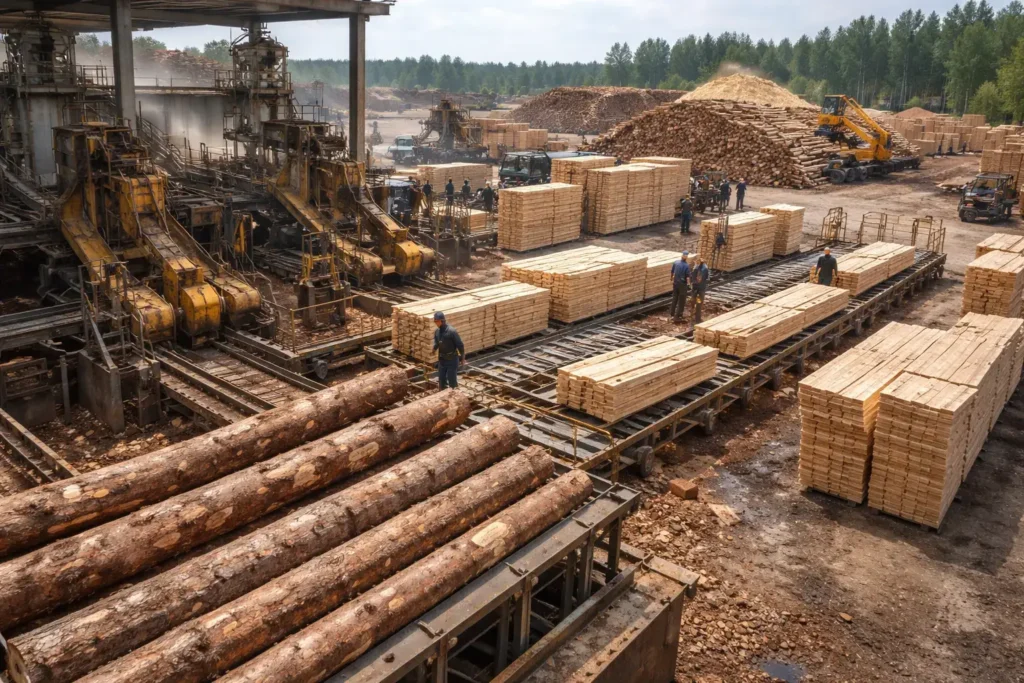
Wood is one of the most important things which goes into making homes and other buildings. Before lumber gets to construction site, it goes through a number of careful steps. These steps ensures the wood is ready for building work and is strong and safe.
People are often surprised with how much work goes into preparing lumber before it gets to construction sites when they ask, “How lumber is prepared before it reaches construction sites?” Preparing lumber takes a lot of steps. From cutting down trees in the woods to drying and shaping boards in mills. Every step makes wood stronger, better, and easier to use.
Taking trees out of managed forests
The first step in getting the wood ready is to grow trees in forests, where they will be cut down. Forestry teams carefully choose trees that are the right size and age. In the US, sustainable forest management is important because it protects the environment and helps the construction industry.
To cut down trees safely, workers use the special tools. The branches are taken off after cutting, and the trunks are ready to be moved. After that, these logs are put on trucks and sent to lumber mills. Proper harvesting ensures the wood is in good shape, when it starts its journey and before it is processed.
Bringing logs to sawmills
After cutting down trees, the big logs need to be taken to sawmills to be worked on. Logging trucks take these heavy materials from the woods to nearby mills. You need to be careful with this step of moving the logs so they don’t get damaged.
The logs are checked and sorted with size and type of wood at the sawmill. Different kinds of wood are used for the different building projects. Some are better for the framing, while others are better for flooring or finishing. Sorting logs helps mills work more quickly and make lumber products that are always the same.
Cutting logs into rough boards
Big machines inside the sawmill cut the logs into long boards. This is called sawing. The goal is to turn round logs into flat pieces that can be used to build things. The machines are made to cut accurately so that there isn’t a lot of waste.
The boards are still rough and may have edges that aren’t even after cutting. This is the stage where the wood is called rough lumber. The boards look like construction material now, but they aren’t ready to be used yet. The wood needs more work before it can be used safely.
Getting rid of moisture by drying wood
Wood that has just been cut has a lot of water in it. If you use wet wood, it may shrink, warp, or crack after it is put in place. To avoid these problems, the boards need to be dried very carefully. Lumber mills use two common ways to dry wood.
Some wood is left outside to dry on its own over time. Other boards are put in big drying rooms called kilns. Kiln drying gets rid of moisture faster with controlling heat and airflow. Proper drying makes the finished lumber stronger and the more stable.
Checking and grading the quality
Before wood leaves the mill, it is carefully checked. The lumber gets a grade based on these things that tells you how strong and good it looks. People normally use higher grade lumber for the visible or structural uses.
Less demanding parts of the construction may use the lower grades. Grading helps the builders pick the right kind of wood for each job. This system makes sure that building projects are safe and reliable.
Steps for getting wood ready for building use
Choose the right trees and cut them down
Forestry teams pick trees that are strong, healthy, and old. Cutting is done with care to keep plants nearby safe and the forest in balance.
Take off the branches and get the logs ready
After the harvest, the trunk is cleaned the branches are cut. Then, the log is cut into pieces that are easy to move.
Take logs to processing mills
Heavy trucks move logs from the woods to sawmills. Workers at the mill sort logs with size and the type of wood.
Cut the logs into boards
Powerful saw machines cut the logs into long boards of wood. This step turns logs into the rough lumber pieces.
Ensure that the wood is dry
You can dry boards with letting them sit in the air or in controlled kiln chambers. Taking out the moisture stops warping and the cracking in the future.
Make the boards smooth and shape them
Planing machines cut and smooth the surfaces of the wood. This step shapes and sizes boards to their final standard.
Check and rate the wood
Experts look at every board and provide it a grade based on its strength and the quality. Only lumber that has been approved is sent to construction suppliers.
These steps ensure the wood which gets to construction sites is safe and reliable for use in buildings.
Packaging and sending to the suppliers
After the wood has been checked, it is put in bundles and ready to be shipped. Mills stack the boards neatly and wrap them up tightly with strong materials. Labels are put on the wood, so that builders and suppliers can tell what type and grade it is.
After that, the packaged lumber is sent to the building supply stores or directly to big construction companies. Careful packing keeps the wood safe, while it is being moved and stored.
You may like to read: Why Rest Break Is Critical for Safety in Construction Work?
Why it’s important to prepare lumber correctly
For safe and strong building, it is very important to prepare lumber the right way. The wood gets stronger and more stable with each step of the process. If the lumber were used without drying, shaping, and grading, the buildings could have big problems with their structure.
The preparation process also makes it easier for the contractors to get the things done. Uniform boards fit together easily, that cuts down on the time it takes to adjust materials. When builders get good wood, they can concentrate on building safe and sturdy buildings.