Our Story
Local Electrical Estimating Expertise for Long Island City, NY Projects
Long Island City added more housing towers than almost any other New York neighborhood, while Dutch Kills and the waterfront keep converting industrial lots into studios, labs, and offices. Whether you're bidding film studio and life-sciences buildings or industrial-to-office conversions, our electrical estimators build quantities from your drawings, not from rules of thumb.
Floodplain rules in Queens County often require raising service equipment, panels, and meter banks above design flood elevation. That changes feeder lengths and adds platforms, so we measure feeders to the elevated locations shown on the drawings. Electrical scope in Long Island City towers is mostly vertical: bus duct risers, electrical closets stacked floor by floor, emergency power distribution, and fire alarm systems required for high-rise occupancy.
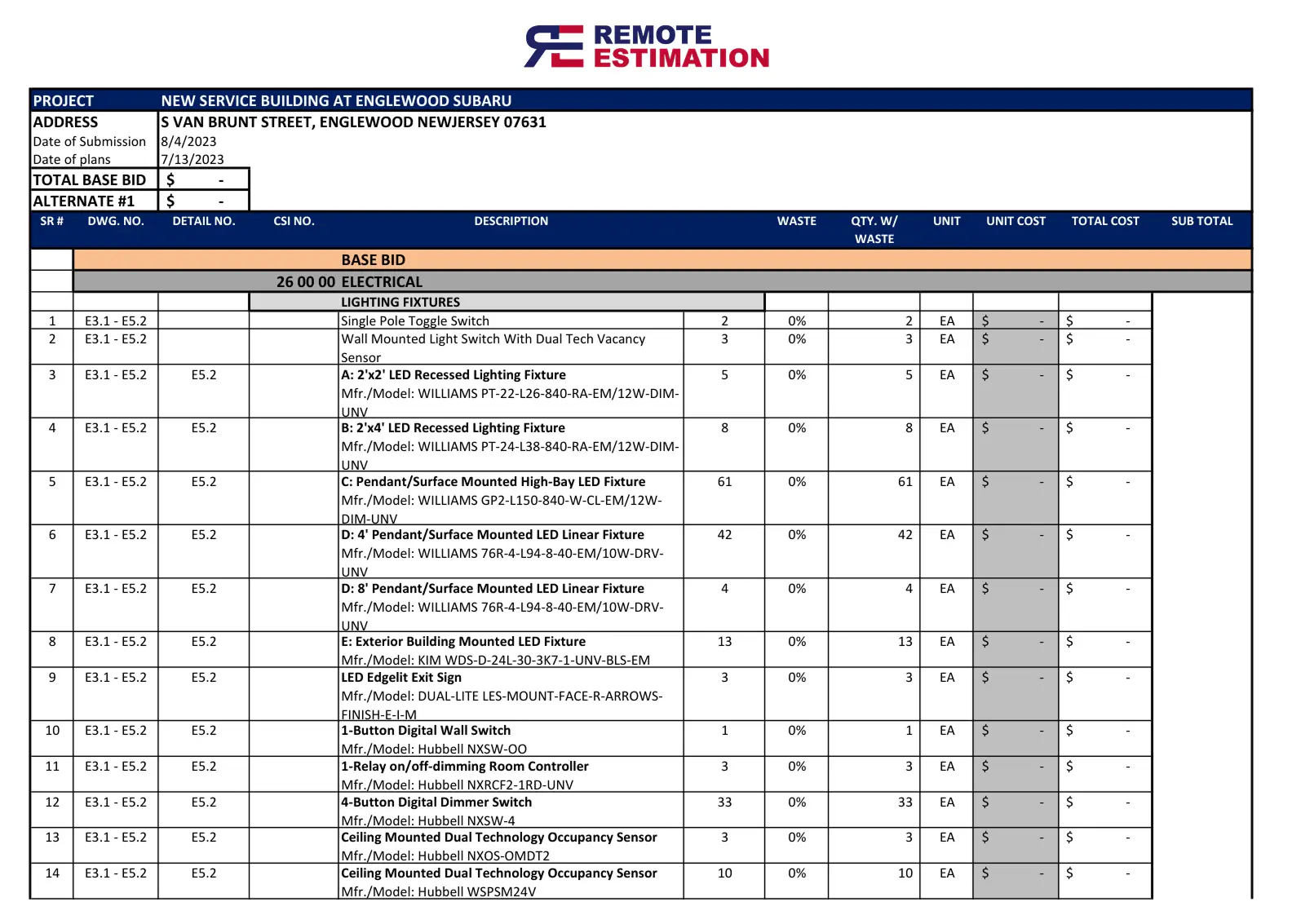
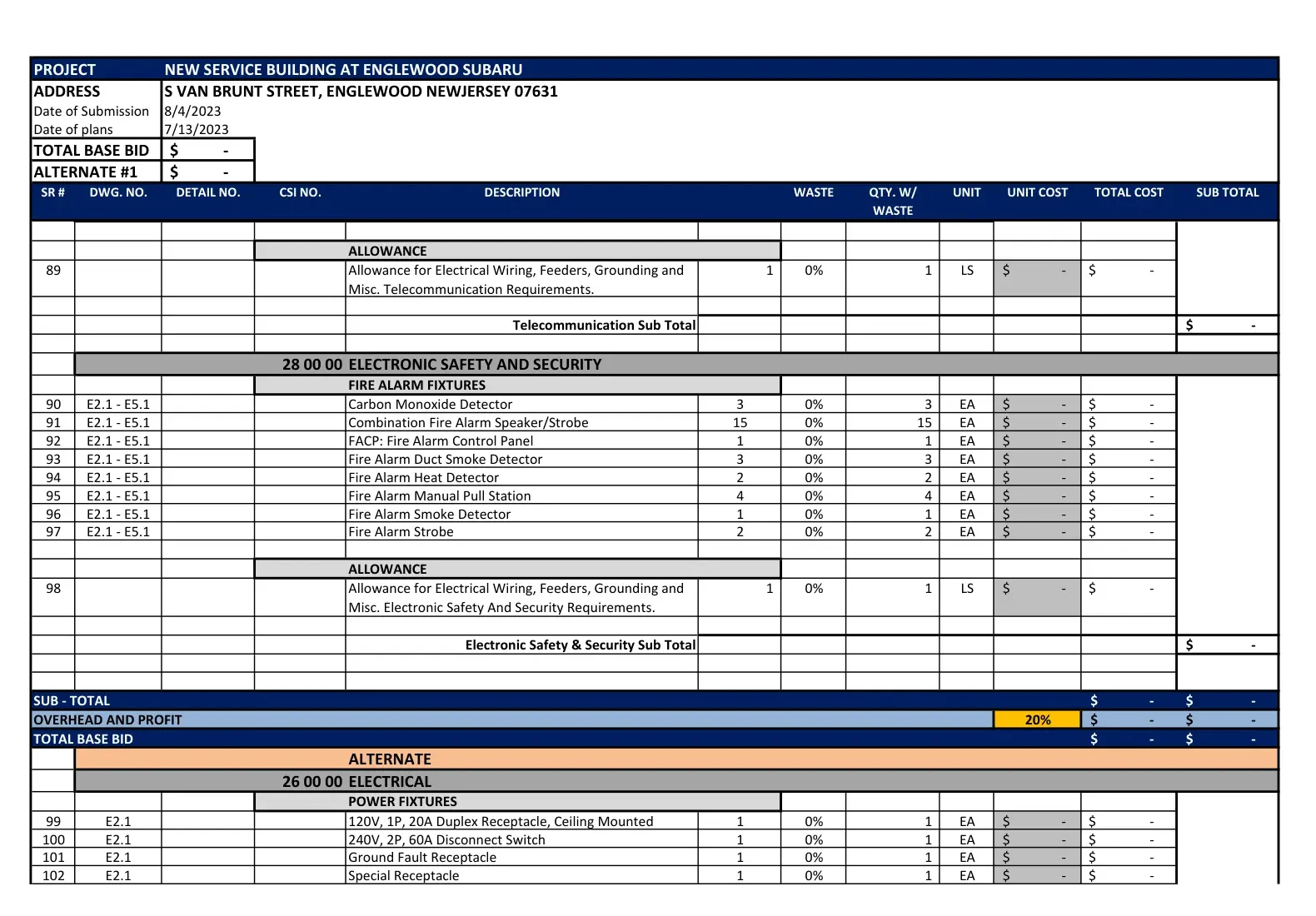
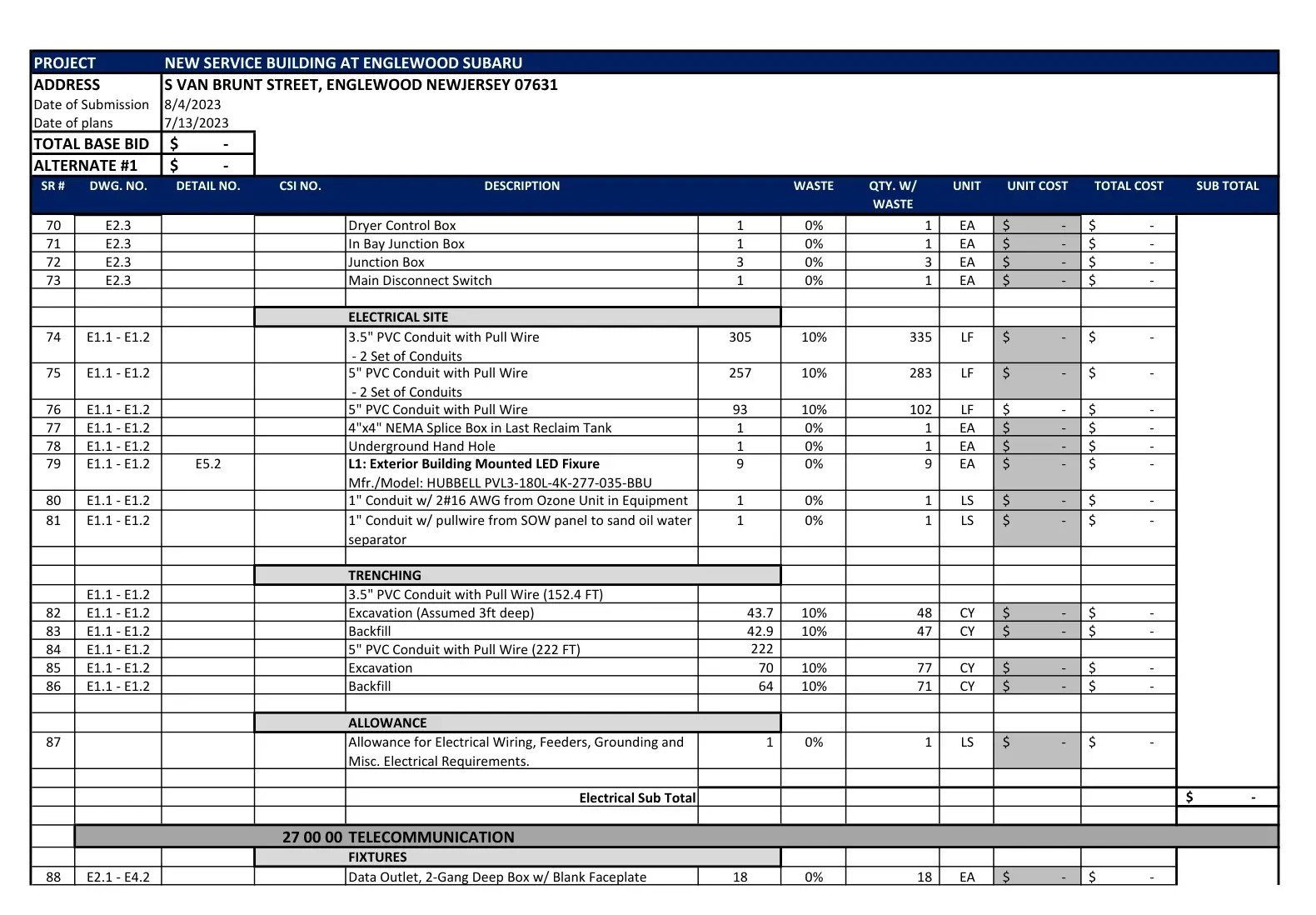
Under the NYC Electrical Code, small details add up: NEC-driven receptacle spacing, AFCI/GFCI protection, emergency lighting, and EV-ready circuits. We catch them during the electrical takeoff instead of after the award. New York City costs such as DOB NOW filings, sidewalk sheds, hoisting, and Local Law 97 upgrades are called out separately when they apply. Measurements are done in ConEst, McCormick, Bluebeam Revu, and PlanSwift and summarized in Excel for your Long Island City bid.
More than 500 contractors nationwide use our electrical and construction estimating services to bid more work with fewer people. For Long Island City firms, that means accurate electrical numbers in 24 to 72 hours, delivered by estimators who understand Queens County. Labor assumptions for the electrical scope are yours to choose: union, prevailing wage, or open shop. Inside the five boroughs, city-funded jobs use the Comptroller's prevailing wage schedules, and union labor is common on private work too. Email your plan set to info@remoteestimation.us for a fixed electrical quote.