
What Is a Purlin in Construction?
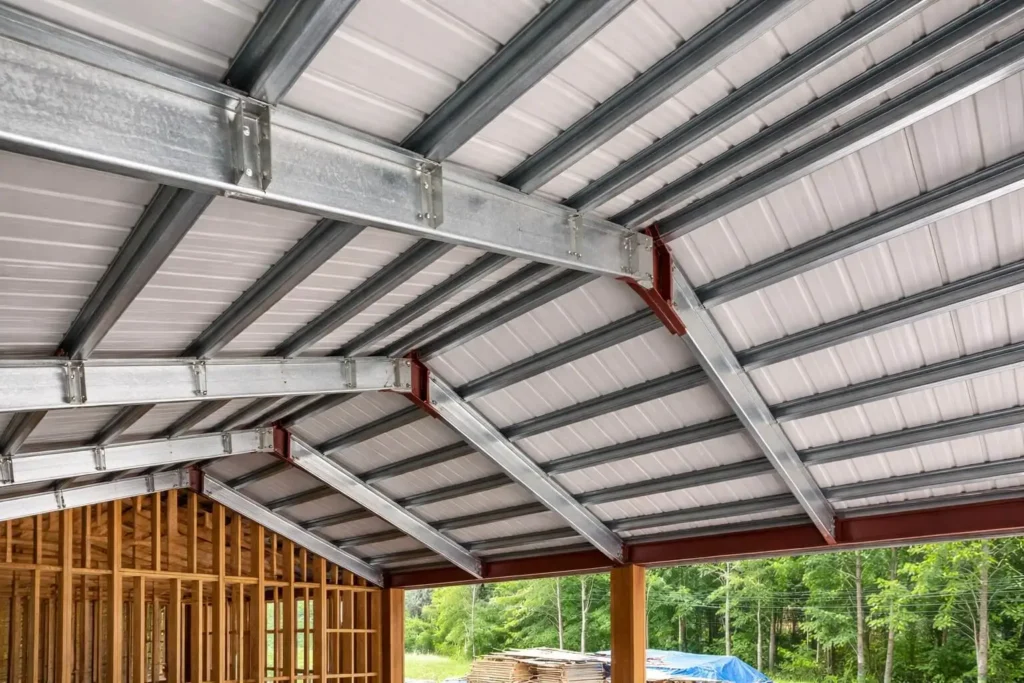
A purlin is a simple beam that helps hold up a roof. People often ask, “What is a purlin in construction?” Which means the long, flat piece that goes under the roof panels. Purlins hold up the roof covering and send the weight back to bigger supports, that are walls, rafters, or trusses. They aren’t as long as the main beams, but they are very important for keeping things stable and strong.
You can make purlins out of the different materials and shapes. People use them in their homes, barns, warehouses, and the factories. You can’t always see them from the ground, while they help keep the roof straight and strong. Putting purlins in the right place helps the roof last longer and keeps the roofing sheets from bending.
How Purlins Keep the Roof Up
The layer of purlins is between the roof covering and the main frame. Roof panels or boards go across the roof from purlin to purlin. This means that each purlin needs to be strong enough to hold the weight. The weight of the roof and the wind, rain, or snow are what make up the load. Purlins carry these loads to rafters, trusses, or walls that can safely hold them.
Engineers decide how big and how far apart the purlins should be. If there is enough space, builders can use lighter roof panels, which can save them money. If the purlins are too weak or too far apart, the roof might sag or leak. A roof that is well-designed will stay safe and clean for a long time.
Common Shapes and Materials
Purlins are made of steel, wood, or sometimes aluminum. Because they are strong and light, steel purlins are often used in factories and other industrial buildings. Steel is often shaped like a C or a Z. C-shaped purlins are easy to attach, and Z-shaped purlins can be stacked on top of each other to make a long line for roofs.
People use wood purlins in their homes and in buildings that are older. Wood looks warm and works well for shorter spans. You have to keep each material safe. You can paint or galvanize steel to stop it from rusting, and you can treat wood to stop it from rotting and getting bugs. The best option depends on the price range and how the building will be used.
Role of Purlins in Load Transfer
Purlins act as a middle link in the load path of a roof. Loads from rain snow and wind press down on the roof covering. That force is transferred to the purlins. From there it moves to rafters or trusses and finally down to columns and foundations.
This step-by-step load transfer is needed for the structural safety. Each member is designed to handle its share of the load. If purlins are missing or undersized other members may become overloaded. Proper purlin design ensures the entire structure works together as intended.
How Engineers Measure and Space Purlins
To figure out how big purlins should be, you need to know how far they need to go and how much weight they need to hold. Engineers use tables and simple math to decide how deep, thick, and far apart things should be. For longer spans, purlins need to be deeper or closer together. In places with a lot of snow or heavy roof coverings, purlins also need to be stronger.
Designers also look at deflection, which is how much a purlin bends when it has weight on it. Too much bend can break roof panels or make pools of water. Limits on bending keep the roof flat and safe. Checks and balances in the design make sure that problems don’t happen before building starts.
How to Install in Common
The purlins are held to the main frames by bolts, clips, or welds. Installers need to check that the roof sheets are level and that the fasteners are tight. You can splice purlins in the middle of long roofs with pieces that overlap to keep them strong. Adding bracing will keep purlins from twisting when they are under load.
Part of fastening is also making sure that holes aren’t too big and that coatings aren’t scratched. If you are careful when you put things together, you can stop leaks and rust from happening later. When the roof is properly aligned and the connections are tight, it works the way the designer planned.
Common Issues and How to Fix Them
You don’t have to do much work on most purlins, but checking them often can help you find problems early. Look for rust around the fasteners on steel purlins and rot on wooden ones. Purlins can move and roof panels can break if the bolts are loose or the clips are missing. Fixing small things is easier and less expensive than fixing big ones.
Also, quickly cleaning gutters and fixing leaks, keeps purlins safe. Water that pools on roofs or near seams can speed up the process of rusting or rotting. If a purlin is badly damaged, an engineer should check the roof to see if any of the other parts nearby were affected. Taking action right away keeps the whole building safe.
Explore to know: What Is Construction Change Directive?
Why Purlins Are Important for the Building’s Life
Purlins may not be the first thing that comes to mind when you think of a roof, but they are very important. They help the roof stay flat and neat and make sure it can hold heavy things safely. If you take care of and design the purlins well, the roof will last longer and cost less to fix over time.
The right material, the right amount of space between the pieces, and careful installation are all things that make a roof last. Knowing what purlins are helps builders, homeowners, and owners make better choices and spot problems early. A roof that is well supported makes you feel safe and keeps the things inside the building safe.