
What Is Glazing In Construction?
Glazing is the part of a building that uses glass or similar clear panels in windows, doors, and walls. If you have ever asked, “what is glazing in construction?” it is basically the work of choosing the right glass and installing it so it looks good and keeps the weather out. It matters for comfort, safety, noise, and energy use. Good glass work can make rooms brighter and reduce glare.
Glazing can be simple, like a small bathroom window, or complex, like a tall curtain wall on a tower. The same idea applies in both cases: the panel must fit, stay supported, and seal tight. In this guide, you will learn where it is used, what materials are common, and how teams check quality on site from start to finish.
Where Glass Work Appears On A Jobsite
You will see glass work in more places than just house windows. Storefronts often use large panels to show products and bring in daylight. Office buildings may use full height glass walls, lobby doors, and interior partitions. Skylights and roof lanterns bring light into deep rooms. On a jobsite, each location has its own demands. A shower enclosure needs water tight seals and smooth edges. A stair guard needs strong supports and safe corners.
A storefront needs careful alignment so doors swing right and frames stay square. In tall buildings, teams plan for wind and movement, so the panel can flex without cracking. Knowing the exact use helps you pick thickness, frame type, and sealant. It also guides storage and handling, since glass can chip if edges touch concrete or tools. Mark each opening, check the rough size twice, and keep a clear path for delivery. Use racks, corner guards, and soft pads. Coordinate with framing and paint crews so panels are set after messy work is done.
Glass Options And What Makes Them Different
Not all glass is the same. Clear annealed glass is basic and can break into sharp pieces, so it is not used where people could fall into it. The Tempered glass is heat treated so it is stronger and breaks into small cubes. Coatings and tints change how glass performs. Some panes include a solar control layer to reduce glare and fading from sunlight. Frosted or patterned glass gives privacy in bathrooms and offices.
You may also see acoustic glass, which uses special layers to cut traffic noise. When choosing materials, match the glass to the risk and the climate. Think about wind load, impact risk, and how close people will be to the opening. Ask for the exact safety rating and thickness. Review the spacer, sealant, and edge finish, because weak edges can lead to leaks and fogging inside the unit after cold, wet long seasons.
How Panels Are Set, Supported, And Sealed
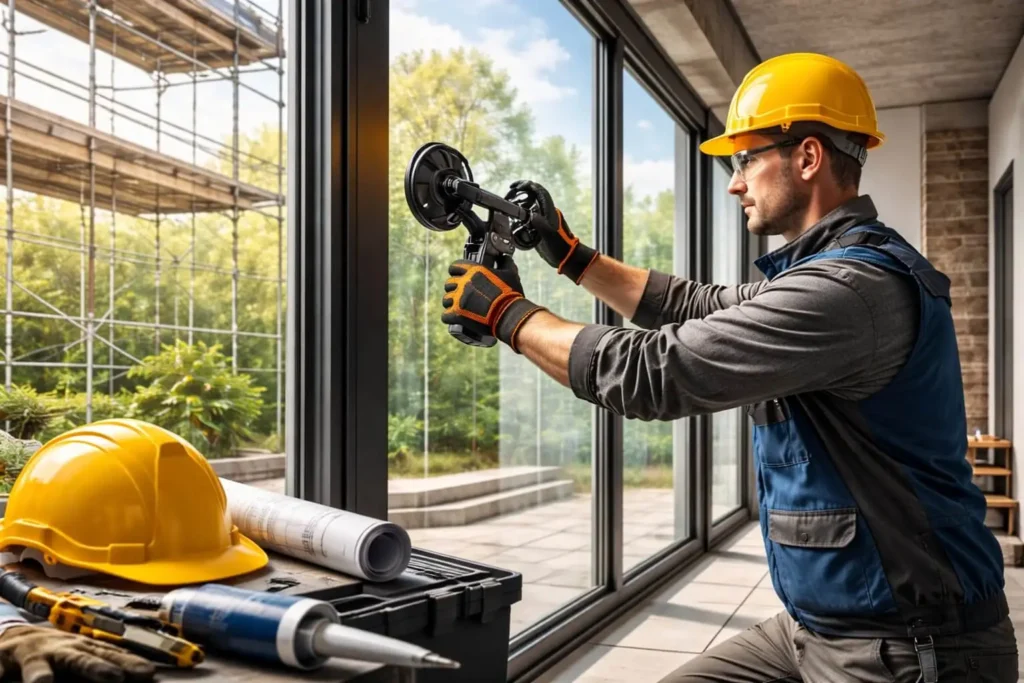
Before a panel goes in, crews measure the opening and check the frame. The sill must be level, and the sides must be plumb, or the panel can bind and crack. Installers also clean dust, oil, and old sealant so new materials stick. They set small setting blocks at the bottom to carry the weight. For big panels, they use suction cups and lifts to avoid twisting the glass. After the panel is placed, crews add gaskets or apply sealant in a smooth bead. They tool the seal so it presses into the joint and sheds water.
They leave the right gap so that the glass can expand and contract with temperature changes. Then they add stops or caps that hold the panel tight without pinching it. If the unit is insulated, crews also check weep holes so any water can drain out. Good sealing is not only about stopping rain and drafts. It also blocks air leaks, cuts noise, and protects frames from rot. Allow proper cure time before washing. Check seals again after a hot day and after a cold night so joints stay fully tight.
Safety And Energy Rules You Should Know
Building rules focus on people safety first. Glass near doors, floors, tubs, and stairs often must be safety rated. That usually means tempered or laminated material, or both. The goal is to lower the chance of serious cuts if it breaks. Thickness and support also matter. A thin pane in a large opening can flex too much in wind, so engineers set limits for each project. Energy rules look at heat loss and comfort. Insulated units help slow heat flow, which can lower heating and cooling costs.
In some places, codes also set limits for how much sun heat can enter on big west facing walls. Proper framing and seal details help prevent drafts and water leaks. If water gets inside, it can rot wood, rust steel, and cause mold in walls. Teams also confirm fire rated units match the approved listing. If a unit requires impact resistance, so inspect the stamp on the pane. If a unit has a special coating, confirm the label faces the correct side. Take photos of labels before trims cover them. Review these details early, not after walls are closed and walls are painted.
Explore more: How To Monitor Construction Site Quality?
Cleaning, Inspections, And Long Term Care
After installation, care keeps glass looking clear and seals working. Start with gentle cleaning. Use the mild soap and water, then rinse well. Avoid rough pads that can scratch coatings. Keep metal tools away from edges and corners, since small chips can grow into cracks. In busy areas, add simple protection like corner guards on frames and door stiles. Inspection is just as important. Walk the building after heavy rain and look for wet spots near sills and corners. Check for gaps in sealant, loose stops, or torn gaskets.
If you see fog inside an insulated unit, the edge seal may have failed. Record the location, the room, and the panel size so replacements are easy to order. Also check hardware on glass doors, like closers and hinges, because loose hardware can twist the panel. Plan small fixes early, before water reaches wall cavities. When you schedule routine checks, set them at season changes. Heat and cold can reveal movement problems. Keep spare gaskets and sealant on hand. Touch up joints where needed. With the simple care, panels stay safe, clear, and quiet for years.