
What Is Shoring in Building Construction?
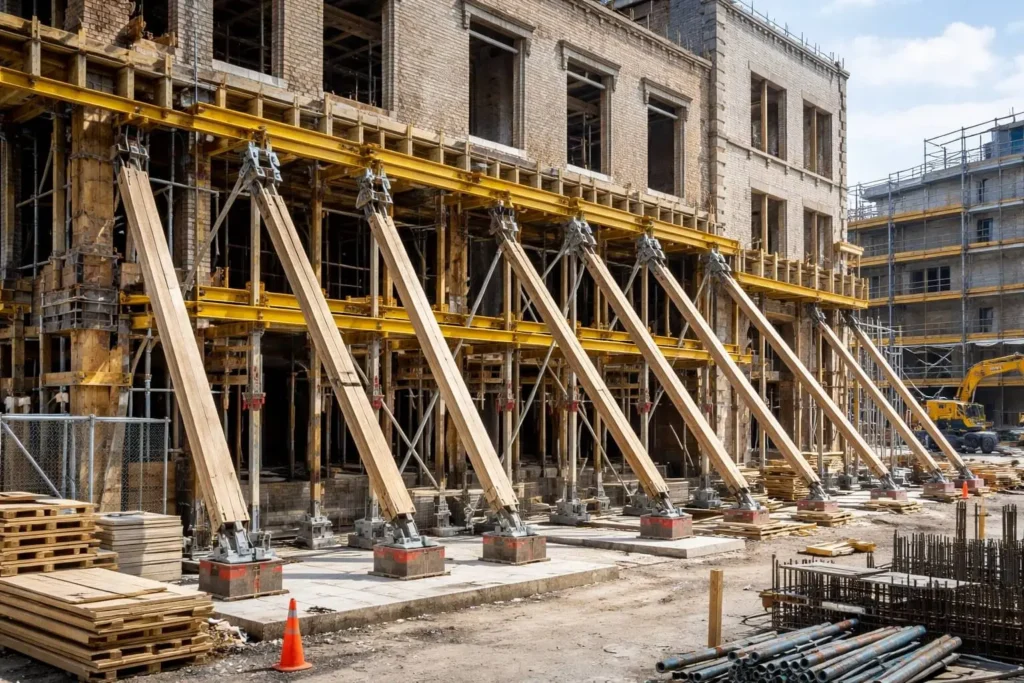
To keep workers safe and buildings stable, a lot of construction projects need temporary support. When people see braces holding walls or trenches in place, they often ask what is shoring in building construction. This method uses extra supports to keep things from falling apart while repairs or new work are being done. It keeps nearby property safe and gives crews the confidence to work on active sites of all sizes in busy areas.
This subject is important for builders, homeowners, and inspectors who want to know what they are doing. Knowing what these supports are for, how to plan for them, and what their limits are can help cut down on risks and delays. It also makes it easier for teams on site to talk to each other. The sections below explain how to use methods, materials, and safety in simple terms for people who want to know how to make practical decisions during the early planning stages and while working on small and large projects.
Why you need temporary structural support
Temporary support systems are used to keep parts of a building still while work is being done. They help move heavy things that walls, floors, or soil can’t handle on their own during changes. These supports keep everything in balance when sections are opened or changed. This lets workers do their jobs without worrying about things moving suddenly. Good planning ensure each job has the right amount of strength and is in the right place.
These systems also protect buildings, streets, and facilities that are nearby. If they don’t get the extra support, so vibrations or shifting the soil could hurt the places outside of the work location. Using the right support makes repairs and legal fees affordable. It also keeps projects on track. When the things are stable, crews can get their work done faster. The main goal is to keep people safe and make sure everything works during temporary conditions on the job site.
Situations That Often Need More Help
Because the ground can shift without warning, excavation work often needs extra support. When the sides are left open, deep trenches for pipes or foundations are dangerous. Support systems stop the soil from falling in. This keeps trench shape and protects the workers who are working below ground. Because there isn’t much space, cities with buildings close by need extra care.
When walls or floors are taken out, repair and remodeling work also needs help. Some parts of older buildings may not be able to stand on their own. When work is being done on a bridge or road, supports hold parts in place while they are being replaced. Temporary systems are also helpful for fixing storm damage. In each case, the goal is to keep things from falling apart while changes are being made.
The Main Benefits of Using Temporary Support
1. Prevents sudden collapse during work
Temporary support systems help hold walls soil and structures in place while work is going on. This reduces the risk of sudden failure that could cause serious injuries. Workers can focus on their tasks without fear of unexpected movement or collapse.
2. Protects workers equipment and nearby property
These supports create a safer space for tools machines and materials. They also protect the nearby homes roads and buildings from damage caused by shifting soil or structural movement. This lowers repair costs and avoids unnecessary disputes.
3. Makes excavation and repair work safer
Digging trenches or fixing the damaged structures can be dangerous without added support. Temporary systems keep open areas stable and reduce hazards. This allows crews to complete tasks with better control and fewer accidents.
4. Holds structures until permanent elements are installed
During construction, some parts of a building are not strong enough on their own. Temporary support keeps everything stable until permanent walls beams or foundations are finished and secured.
5. Improves project planning control and confidence
When a site is properly supported teams work with greater confidence. This improves the coordination reduces the delays and helps projects stay on schedule while meeting safety standards.
Things Used to Make Temporary Support Systems
Wood is a popular option as it is easy to shape and change on the job site. It works great for the small loads and short-term jobs. When strength and durability are important, steel is used. It can handle a lot of pressure and be used again and again. Aluminum is lighter and easier to move, which is helpful in small spaces.
You can also make quick changes with hydraulic tools. These tools help the crews apply force evenly and make changes quickly. Before using any materials, they must all meet safety standards and be inspected. The choice relies on how big the load is, the site conditions, and how long the project will take. Using the right materials makes work safer and more efficient.
Steps to Take When Setting Up and Taking Down
Trained staff begin by looking over the site. They look at the load points of different kinds of soil and the buildings that are nearby. There is a clear plan in place before any equipment arrives. To avoid sudden changes, supports are put in place in stages. Workers carefully follow drawings and measurements to make sure everything is correct.
Slowly take things away after the permanent parts are safe. Loads are moved back in a safe way. Crews keep an eye out for movement and make changes as needed. Hurrying this step can hurt things. Removing things the right way keeps the site safe until the project is done and ready for regular use.
Read more: What Is Glazing In Construction?
Best Practices and Safety Rules for the Site
Everyone needs to get safety training. Workers need to know how to find risks and tell someone about them. You should always wear protective gear. Daily checks help find parts that are loose or worn out. Signs and barriers that are easy to see keep people out of danger zones.
Supervision makes sure that rules are followed the right way. Only approved materials and designs are used. We keep an eye on the weather because rain or heat can make things less stable. Good communication keeps teams on their toes. Following best practices makes work go more smoothly and cuts down on accidents.